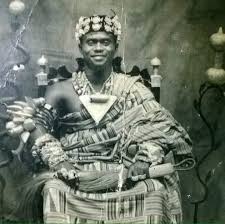
Kingdom of Bono
The Bono (or Brong) state was among the earliest Akan kingdoms, centred around modern Techiman. It became a major gold-trading hub and is considered the ancestral state from which many later Akan peoples migrated.
By the 15th century, Bono had established itself as a sophisticated trading centre, controlling the flow of gold from the forest regions to the northern trade routes. The kingdom's prosperity attracted merchants from across West Africa.
The Bono state served as the ancestral homeland from which the Asante, Denkyira, and other Akan kingdoms emerged during the 17th century.
Major Akan States
Dominant Power
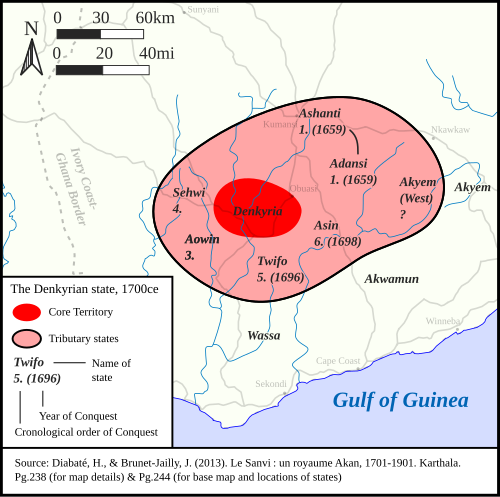
By the 17th century, Denkyira became the dominant Akan power — controlling access to European trade at the coast and extracting tribute from dozens of smaller states.
Cultural Heritage
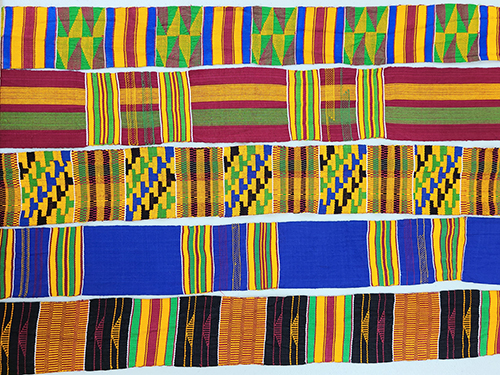
The Akan developed one of the world's most sophisticated goldsmithing traditions, producing weights, ornaments, and regalia of exquisite craftsmanship.
Stool System
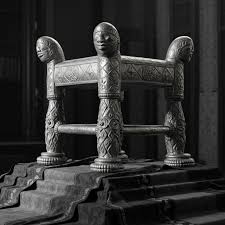
The concept of the Stool — a sacred wooden throne believed to house the spirit of the ancestors — was central to political authority in all Akan kingdoms.
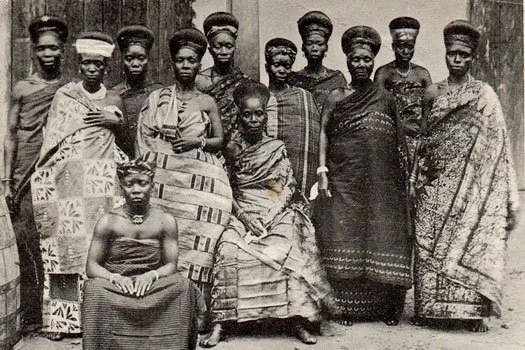
Matrilineal Heritage
Akan kingdoms were organised around the matrilineal clan system — inheritance and identity passed through the mother's line. The role of the Ohemaa (Queen Mother) as kingmaker and advisor was constitutionally central to governance.
Gold was not merely wealth — it was spiritual currency. The gold weights (abrammuo) used to measure gold dust were miniature sculptures encoding Akan philosophy in metal.
The fall of Denkyira to Asante in 1701 transformed the region, leading to the rise of the Asante Empire as the dominant power in the Ghanaian forest zone.