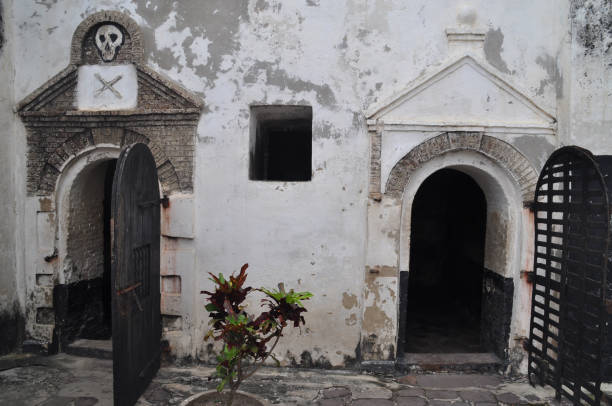
The Door of No Return
Portuguese explorer Diogo de Azambuja arrived at the Gold Coast in 1471, and by 1482 had built Elmina Castle — the first permanent European structure in sub-Saharan Africa.
Initially a trading post for gold, it became a processing centre for enslaved human beings as European demand shifted. Over three centuries, an estimated 12 million people were transported across the Atlantic from West Africa.
Elmina, Cape Coast Castle, and dozens of smaller forts formed a chain of horror along the coastline — warehouses for human beings awaiting the Middle Passage.
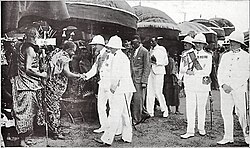
The Gold Coast Colony
By 1874, Britain formally declared the coastal Gold Coast a Crown Colony. Following the Asante Wars, the full territory was consolidated under British administration by 1902.
Colonial rule brought roads, railways, and schools — but on terms entirely designed to serve British commercial interests, particularly cocoa and gold extraction.
The contradiction — educating Africans in Western democratic values while denying those values in practice — would eventually produce the generation that dismantled the system.