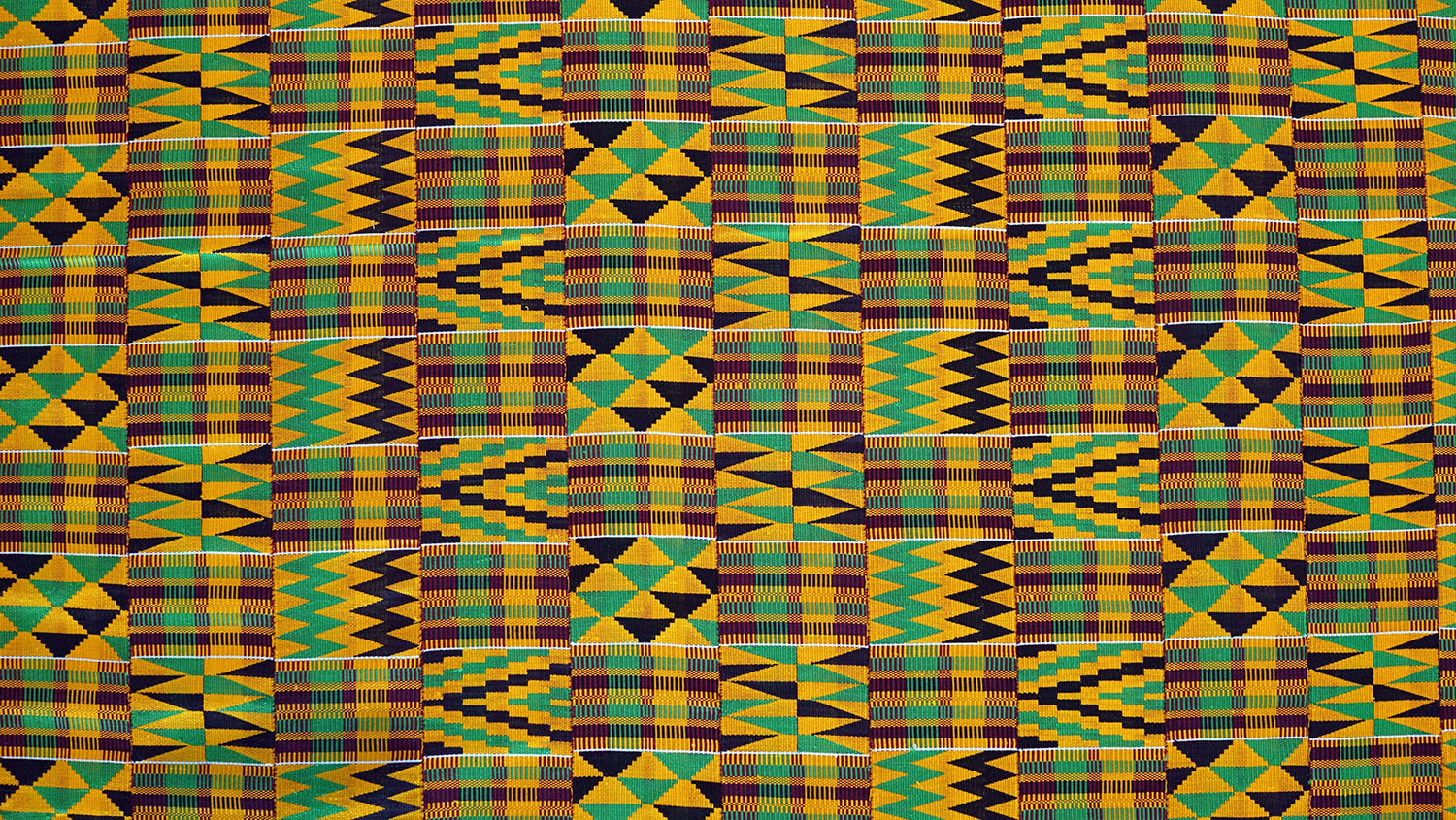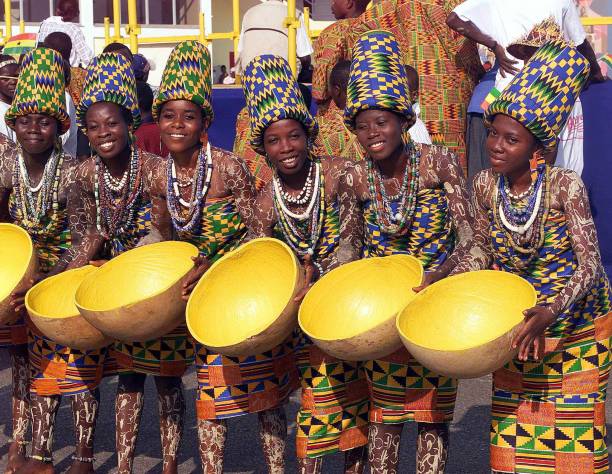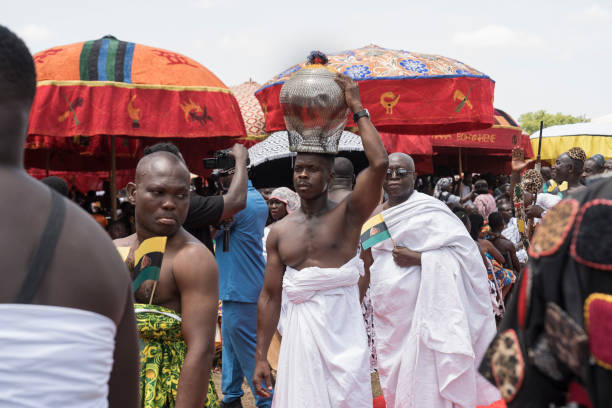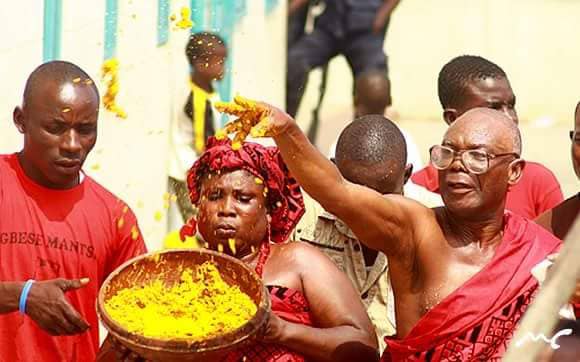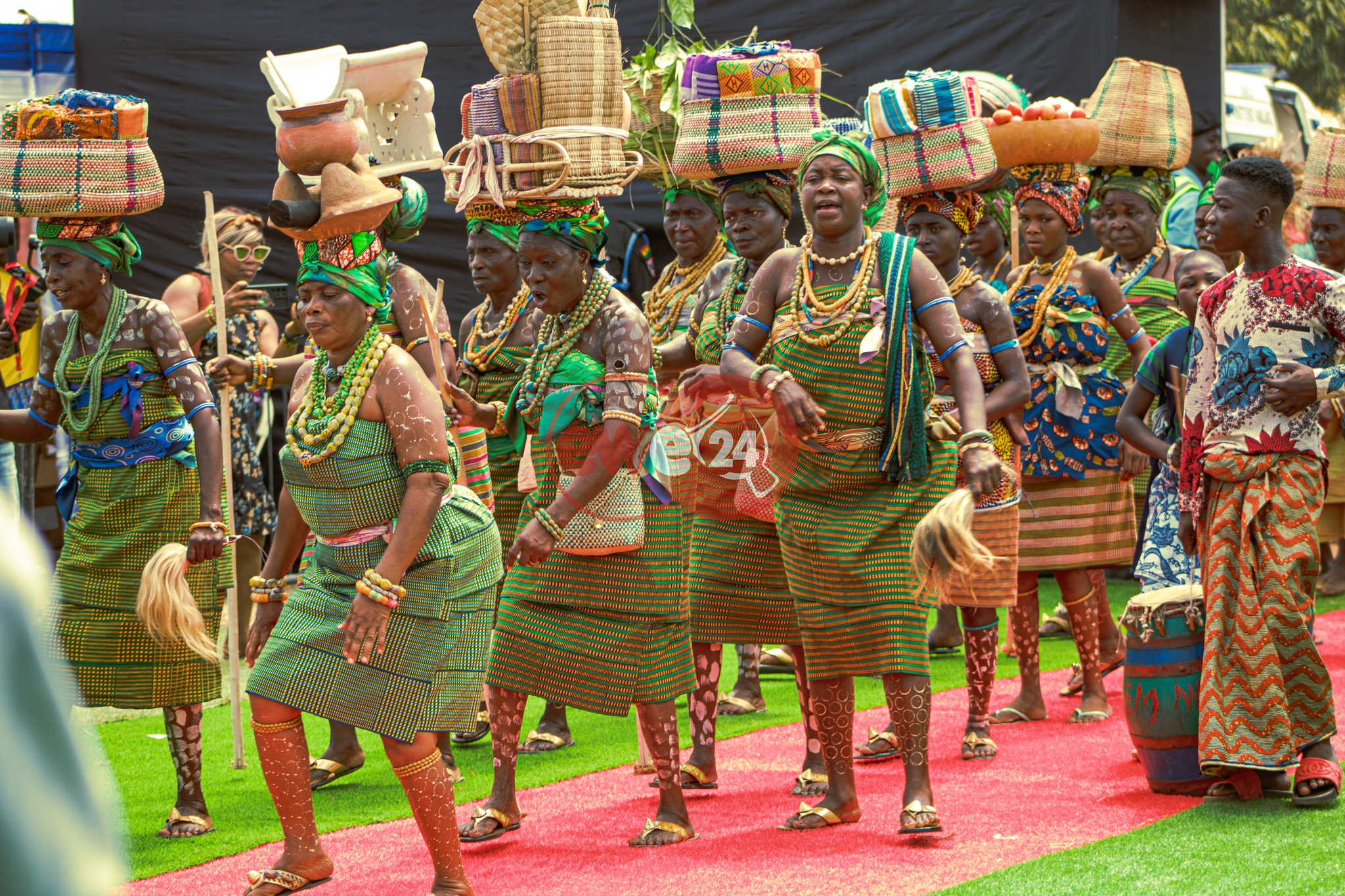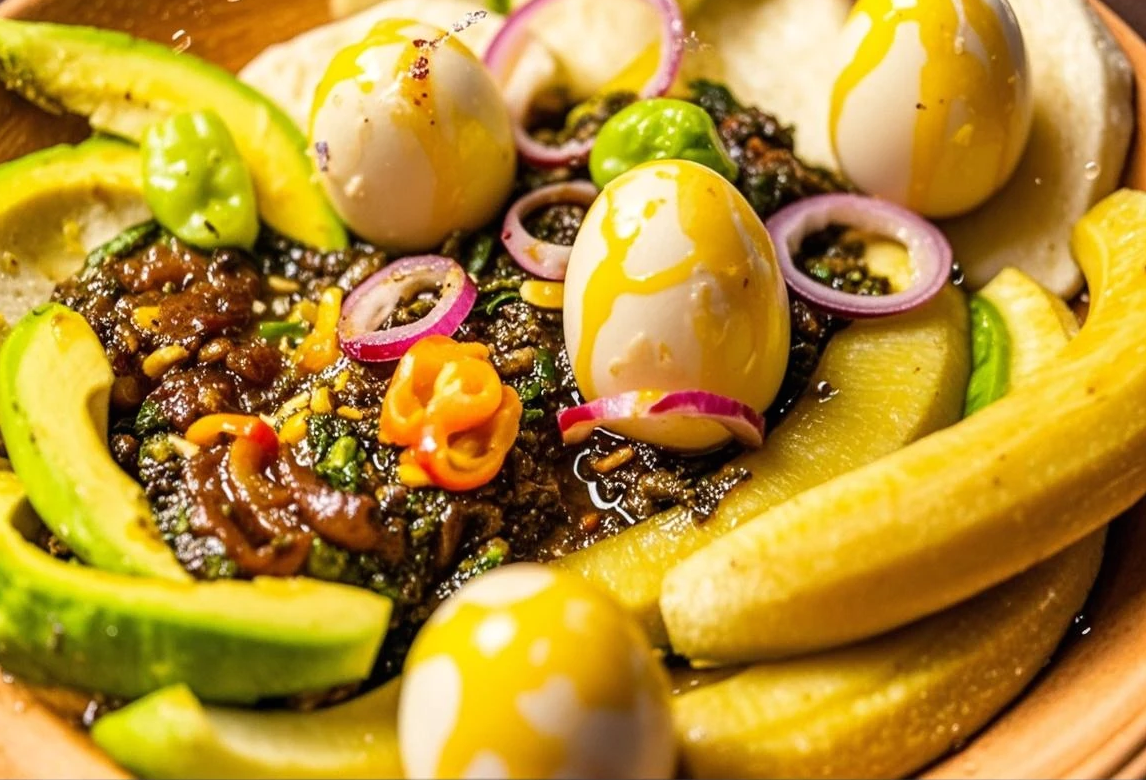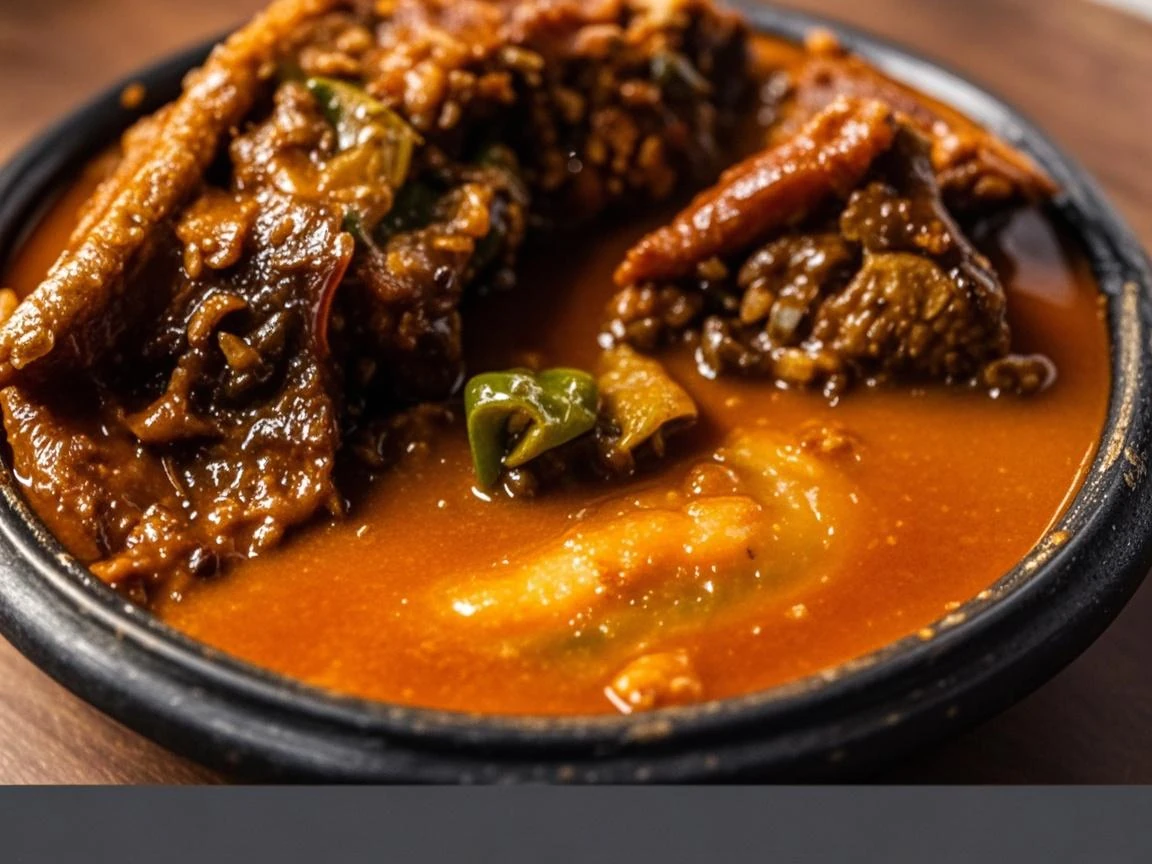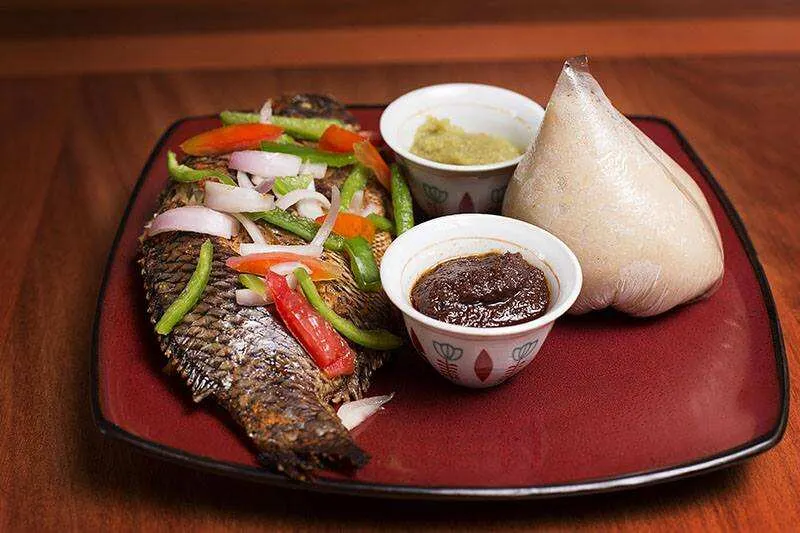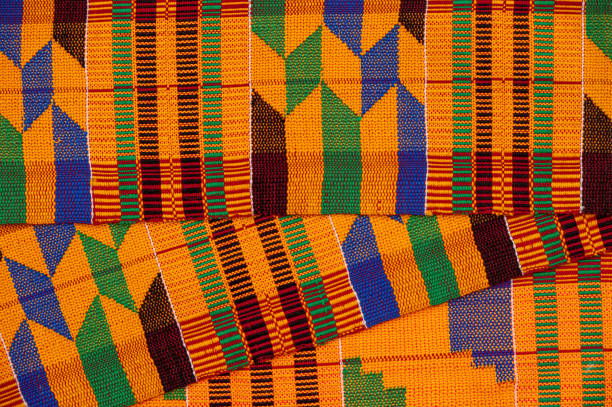
Our culture can be seen through our dance, the food we eat like fufu and banku, the way we greet elders with respect, the clothes we wear like Kente, the festivals we celebrate such as Homowo Festival, and the languages we speak like Twi.
Kente is not merely fabric — it is a language. Each colour, each geometric pattern woven on the narrow-strip looms of Bonwire near Kumasi carries a specific name, meaning, and appropriate occasion. Gold represents royalty, wealth, and spiritual purity. Green evokes growth and renewal. Red signals political and sacrificial significance. Black represents spiritual maturity and the ancestors.
The Asante tradition traces kente to the 17th century, with the legendary weavers Ota Kraban and Kwaku Ameyaw who, inspired by a spider's web, created the first kente patterns. The Ewe people of the Volta region have their own ancient kente tradition, with more pictorial and narrative patterns that tell stories of community life and proverbs.
Today, kente is worn globally as a symbol of African pride — at graduation ceremonies, state functions, and cultural events from Accra to Atlanta. In 2020, members of the US Congress wore kente stoles in solidarity with the Black Lives Matter movement — a powerful testament to the cloth's reach.
Ghana's President Nana Akufo-Addo regularly addresses the UN General Assembly wearing kente — a diplomatic statement that Ghana's ancient cultural heritage stands equal with any Western suit.
Adinkra are visual symbols originating from the Akan people of Ghana and Côte d'Ivoire. Each symbol encodes a proverb, philosophical concept, or aspect of Akan cosmology — a living written language of values, encoded in cloth, architecture, and everyday life.
Ghana's musical contribution to the world is extraordinary — a nation that gave birth to Highlife in the 1920s, shaped Afrobeats in the 2000s, and produces artists that consistently dominate global charts.
Highlife emerged in the early 20th century from the coastal towns of Ghana — a dazzling blend of traditional Akan rhythms, Western brass-band music, and Caribbean influence. Unlike many colonial-era musics that simply imitated Western forms, Highlife was an assertion: we take your instruments and make them ours.
The Tempos, E.T. Mensah, and later K. Gyasi, Nana Ampadu, and the African Brothers Band built an extraordinary body of work — complex guitar lines, lilting brass, and Twi lyrics that explored love, social commentary, and Ghanaian life. Highlife is the soundtrack of modern Ghana's birth.
From Highlife grew Burger Highlife (produced by Ghanaian diaspora in Germany), Hiplife (a 1990s fusion with hip-hop championed by Reggie Rockstone), and eventually the global phenomenon of Afrobeats — in which Ghanaian artists like Sarkodie, Stonebwoy, and Shatta Wale are central figures.
Today's Ghanaian artists — Sarkodie, Stonebwoy, Shatta Wale, Efya, and Amaarae — are part of a global Afrobeats movement that has conquered streaming platforms, sold out international arenas, and brought Ghanaian culture to every continent.
Festivals are the heartbeat of Ghanaian communal life — occasions to honour ancestors, celebrate harvests, reaffirm identity, and bind communities together in joy.
The Asante's most sacred ceremony, held every six weeks at the Manhyia Palace in Kumasi. Chiefs arrive in full regalia to pay homage to the Asantehene and commune with ancestral spirits.
The Ga people's harvest festival of "hooting at hunger." Families gather to share palm nut soup and kpokpoi, pour libations for ancestors, and celebrate survival — a memory of a great famine overcome.
The Anlo Ewe people's commemoration of their liberation from the tyrannical king Agorkorli. The festival re-enacts the epic midnight escape from Notsie in present-day Togo — a story of courage and freedom.
Ghanaian food is inseparable from its cultural fabric. Rooted in West African traditions, shaped by the forest, savannah, and coast, each dish carries the fingerprints of the Akan, Ga, Ewe, Dagomba, and dozens of other peoples who call Ghana home. Spices, fermented ingredients, slow-cooked stews, and communal eating define a cuisine that is bold, nourishing, and deeply intentional.
These are the pillars of Ghanaian cuisine — dishes passed down through generations, tied to memory, celebration, and everyday life.
"Obi nkyere onipa akoma — No one points at another's heart. But every Ghanaian can point to the pot that raised them."— Ghanaian proverb on food, family & belonging