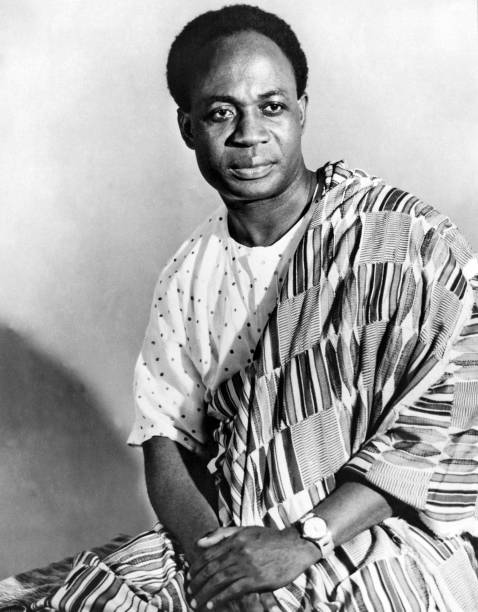
Key People Present
Prime Minister, orator
Representing HM The Queen
US Vice President
Civil rights leader, moved to tears
Emperor of Ethiopia
How Independence Came to Ghana
The weeks before independence had an atmosphere of controlled electricity. Accra was decorated with bunting and flags. British officials were packing their offices. Nkrumah's Convention People's Party had been running the country since 1951 — but this was different. This was permanent.
The negotiations with Britain had been conducted over years of delicate diplomacy. Governor Sir Charles Arden-Clarke — who had imprisoned Nkrumah in 1950 — had developed genuine respect for the man he'd jailed, and the two worked together to ensure a smooth transition that surprised the world with its dignity.
In the hours before midnight, tens of thousands of people packed the Old Polo Ground in central Accra. The stands were overflowing. People climbed trees and rooftops. Church bells rang across the city. In villages across the country, people danced through the night.
Martin Luther King Jr., who had been invited as a personal guest, stood in the crowd and wept openly. He later wrote that the sight of the Ghanaian flag rising deepened his conviction that the freedom struggle in America was inseparable from the liberation of Africa. The experience directly shaped his thinking as he led the Montgomery Bus Boycott and the emerging civil rights movement.
US Vice President Richard Nixon attended, representing the Eisenhower administration. The Cold War context was never far away — both East and West sought to align newly independent African nations with their camp. Nkrumah was determined to align Ghana with neither. "We face neither East nor West," he would say soon after. "We face forward."
This second declaration was the one that reverberated furthest. Nkrumah was not merely celebrating Ghana's independence — he was placing it within a continental project. For him, 6 March 1957 was not an endpoint but a beginning: the first domino in the decolonisation of an entire continent. In the following decade, his prophecy proved true. By 1965, all but the southernmost African nations had achieved independence.